Atomic
A card holds exactly one thing. One NPC. One spell. One relic. That constraint is a gift — it forces clarity, makes everything reusable, and turns a vague idea into an object you can pick up and move.
The card mentality
Every tool you've used to run a campaign asked you to file, scroll, or search. The card asks something better: where do you want to put it? This is the thinking behind DND Cards — and why the table never wants to go back.
Long before software, the table was the interface. We dealt cards, laid out tiles, pushed figures across a map, and turned tokens face-up at the perfect moment. Tabletop roleplaying inherited all of it — and then, somewhere along the way, we tried to cram that tactile, spatial craft into documents and wikis that were built for spreadsheets and memos.
A wiki asks you to remember where you filed something. A document asks you to scroll. A folder asks you to name things perfectly the first time. None of these match how a dungeon master actually thinks at three minutes to game night, when the party is about to do the one thing you didn't prep for.
The card matches it exactly. It is the smallest unit of a story you can hold in your hand. And once your campaign is made of cards, the way you work changes — quietly at first, then all at once.
Why cards land at the table
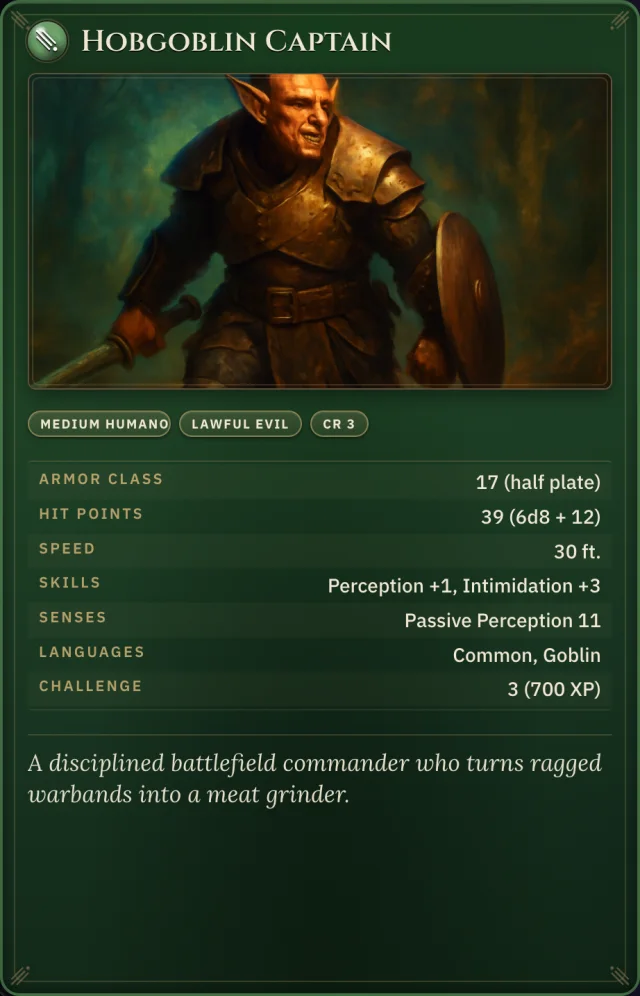
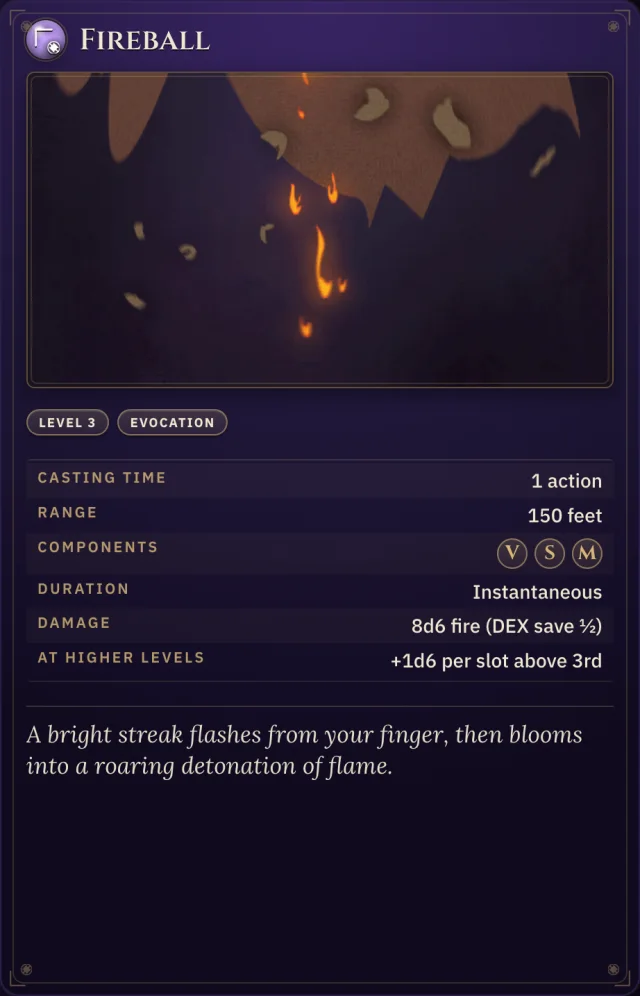
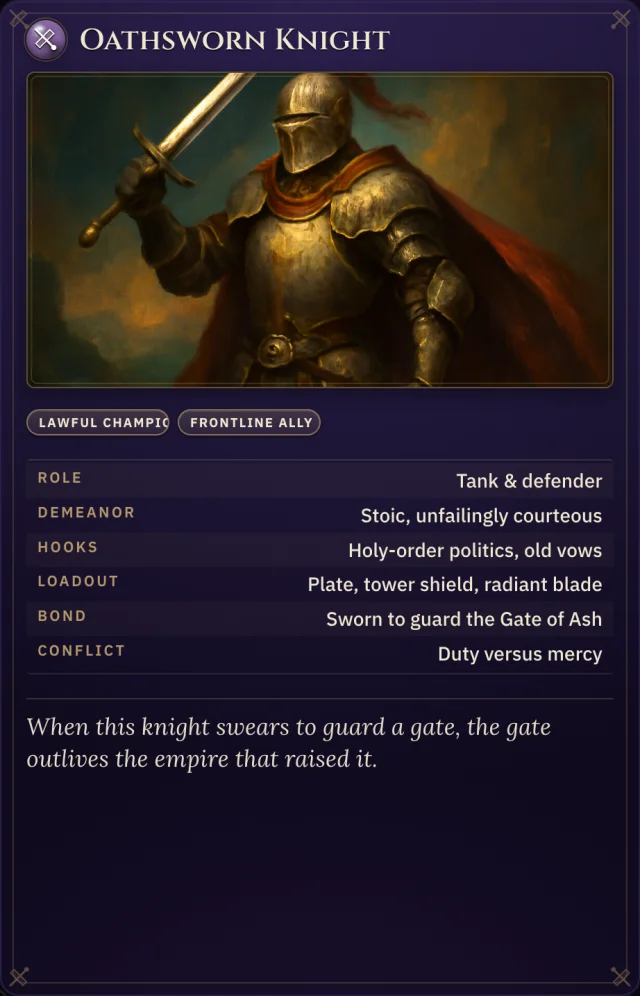
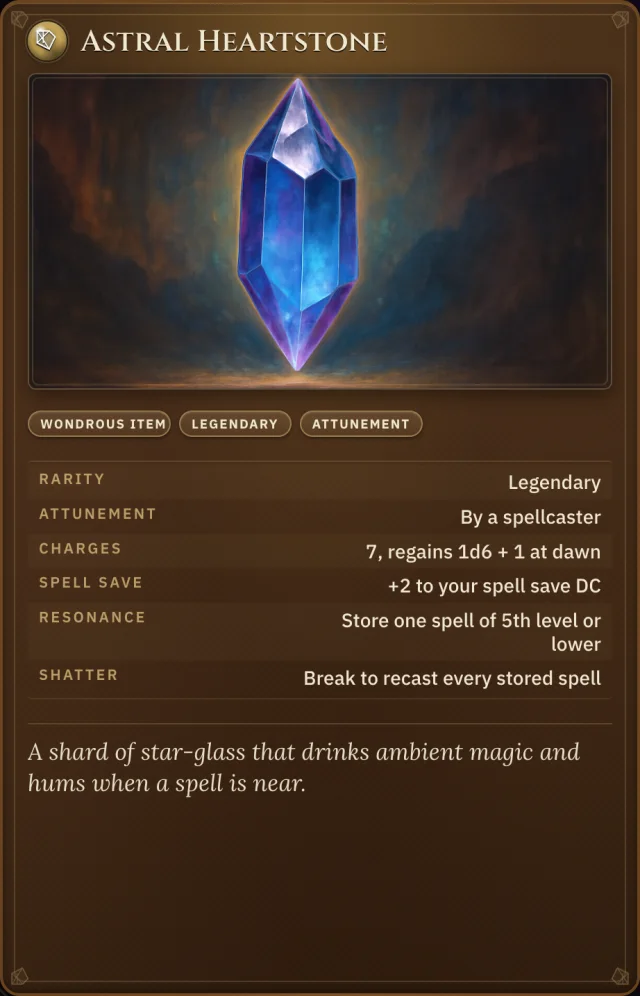
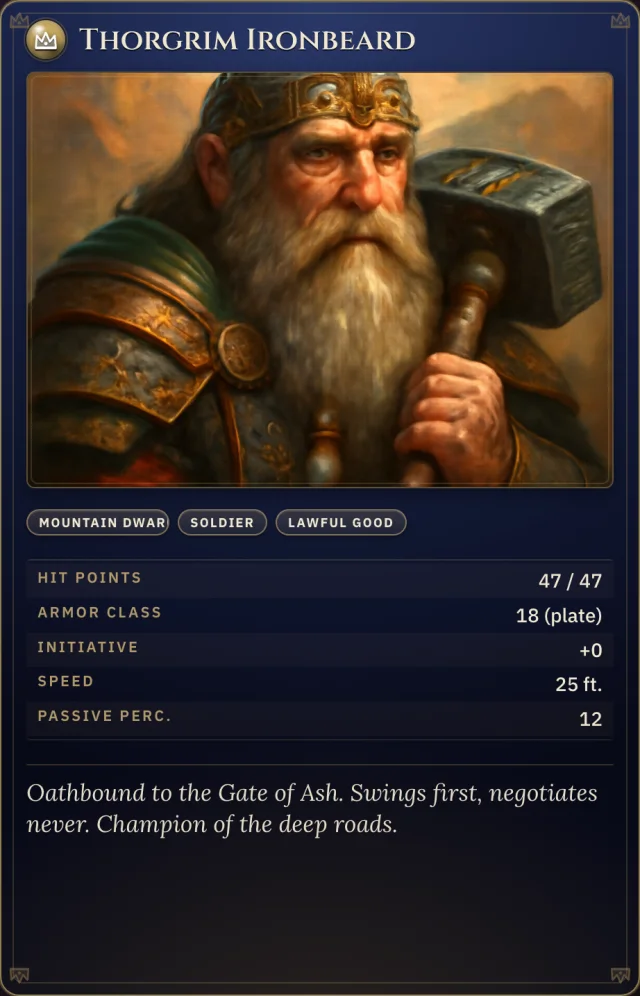
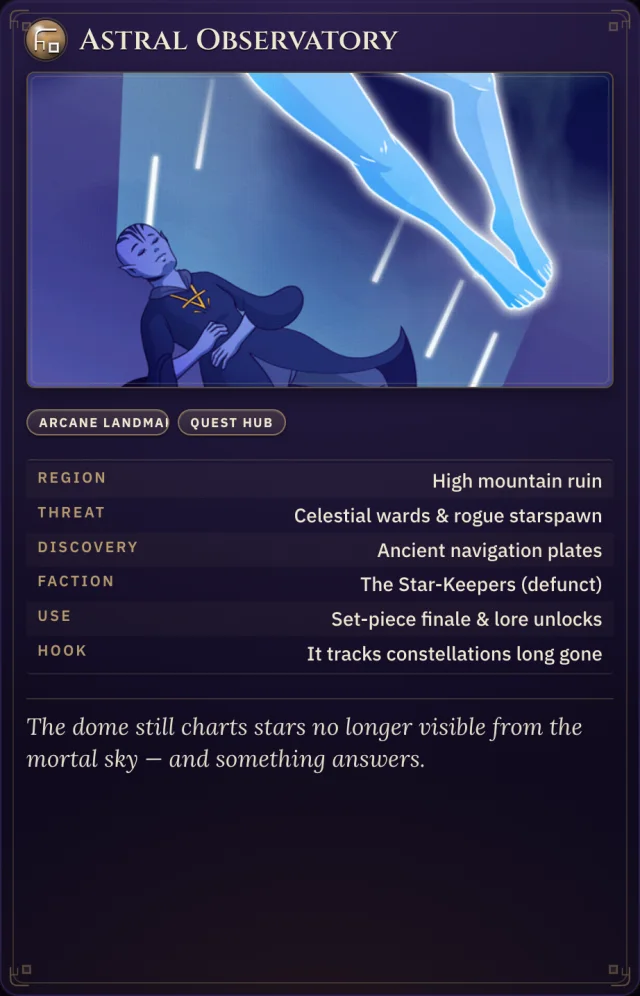
Core-set cards rendered exactly like the product, with full-color art and dense stat payloads to mirror live play.
Four reasons it works
A card holds exactly one thing. One NPC. One spell. One relic. That constraint is a gift — it forces clarity, makes everything reusable, and turns a vague idea into an object you can pick up and move.
Cards live in space, and space is memory. Where you put a card means something. A board becomes a scene, a row becomes an act, a cluster becomes a faction. You navigate by feel, the way you remember a room.
Every card has a front and a back, a face-up and a face-down. Prep becomes performance the moment you can keep a secret in your hand and flip it when the players earn it.
The same card slots into tonight's ambush, next month's reunion, and the lore graph all at once. Build once, deal forever. Your world compounds instead of fragmenting.
“You stop managing a campaign and start dealing one.”
Why tables fall for it
The first time a dungeon master flips a face-down card to reveal a traitor, something clicks. Prep stops feeling like homework and starts feeling like sleight of hand. The work you did in private pays off in public, in the exact beat where it lands hardest.
Players feel it too. A card on the board is concrete in a way a line in a doc never is — it has weight, a portrait, a back you haven't seen yet. The deck makes the world feel handled, present, and alive. It rewards curiosity, because every card is an invitation to turn it over.
And because cards recombine, the love compounds. The NPC you made for a one-shot becomes a recurring villain. The relic from session two anchors the finale. Nothing you build is wasted; it all stays in the deck, ready to be dealt again.
That's the card mentality: small, tangible, recombinable pieces that turn a sprawling campaign into something you can hold, arrange, and reveal. It's not a new idea. It's the oldest one we have — finally given software that respects it.
See how it's builtDeal your first hand
Spin up a workspace with a ready-to-play Demo Deck in a single sign-in. No credit card. No setup ritual.